
Description
DESCRIPTION
General description
Polyacrylamide gels are prepared using acrylamide and bis-acrylamide. Acrylamide is a water-soluble monomer, which forms a transparent stable insoluble gel. Bis-acrylamide is a cross-linking agent.
Application
Acrylamide has been used:
- in polyacrylamide gel electrophoresis
- in the preparation of cleared gel samples
- to determine the effect of L-cysteine on acrylamide-induced testicular toxicity
Packaging
25, 100, 500 g in glass bottle
1 kg in glass bottle
2.5 kg in poly bottle
SAFETY INFORMATION
Pictograms
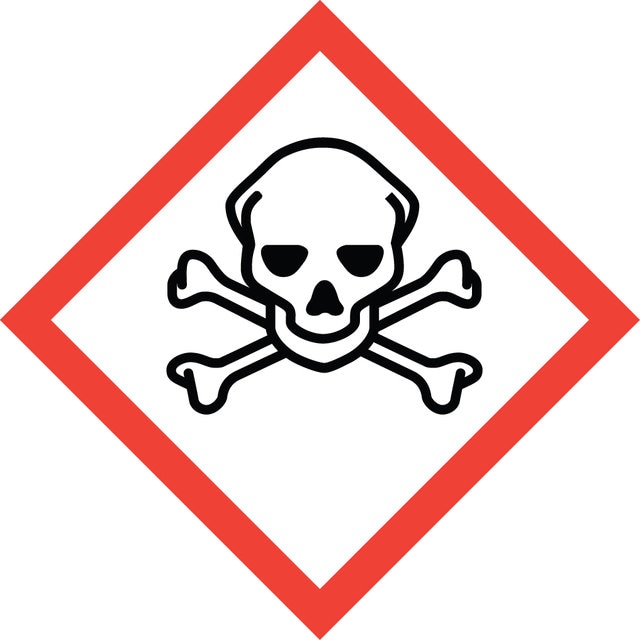
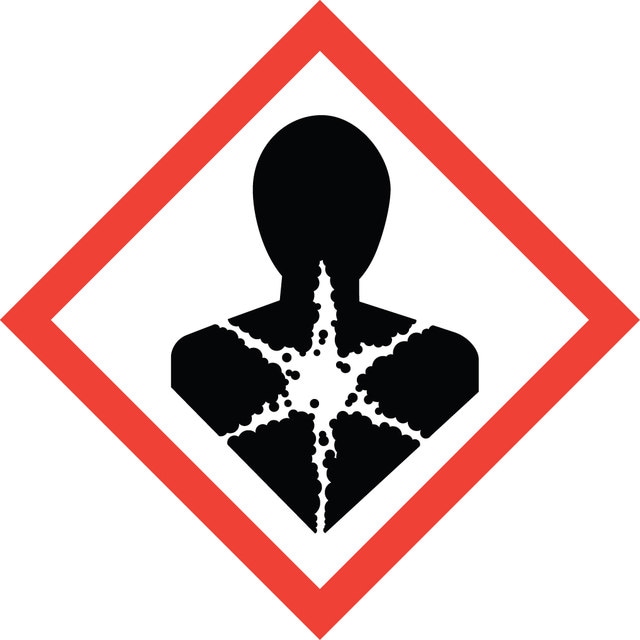
GHS06,GHS08
Signal Word
Danger
Hazard Statements
H301 – H312 + H332 – H315 – H317 – H319 – H340 – H350 – H361f – H372
Precautionary Statements
P202 – P280 – P301 + P310 – P302 + P352 + P312 – P304 + P340 + P312 – P305 + P351 + P338
Hazard Classifications
Acute Tox. 3 Oral – Acute Tox. 4 Dermal – Acute Tox. 4 Inhalation – Carc. 1B – Eye Irrit. 2 – Muta. 1B – Repr. 2 – Skin Irrit. 2 – Skin Sens. 1 – STOT RE 1 Oral
Target Organs
Peripheral nervous system
Storage Class Code
6.1C – Combustible, acute toxic Cat.3 / toxic compounds or compounds which causing chronic effects
WGK
WGK 3
Flash Point(F)
280.4 °F – closed cup
Flash Point(C)
138 °C – closed cup
Personal Protective Equipment
dust mask type N95 (US), Eye shields, Gloves
PEER REVIEWED PAPERS
Ana Techniqs in Biotechnology (2011)
Separation of Thylakoid Protein Complexes with Two-dimensional Native-PAGE.
Rantala M, et al.
The Plant Journal, 8(13), 29089-29089 (2017)
Electrical characterization of DNA supported on nitrocellulose membranes.
Al AM, et al.
Scientific Reports, 6(4), 29089-29089 (2016)
Mild myelin disruption elicits early alteration in behavior and proliferation in the subventricular zone.
Gould EA,et al.
eLife, 7(4-5), e34783-e34783 (2018)
L-Cysteine Partially Protects Against Acrylamide-Induced Testicular Toxicity.
Kacar S, et al.
Balkan medical journal, 35(4), 311-311 (2018)

Reviews
There are no reviews yet.