anhydrous for analysis ACS,ISO,Reag. Ph Eur
Synonym(s):
Acetic acid, Ethanoic acid, Glacial acetic acid
Cat Number: BC-69501
CAS Number: 64-19-7
Linear Formula: CH3CO2H
Molecular Weight:  60.05
Beilstein: 506007
MDL number: MFCD00036152

PROPERTIES

Grade                                                 ACS reagent

Quality Level                                    300

vapor density                                  2.07 (vs air)

vapor pressure                               15.4 hPa ( 20 °C)

assay                                     ≥99.8% (alkalimetric)

form                                                   liquid

autoignition temp.              485 °C 800 °F

potency                                             3310 mg/kg LD50, oral (Rat)

expl. lim.                                            16 %, 92 °F 4 %, 59 °F

technique(s)                                    UV/Vis spectroscopy: suitable

refractive index                               n20/D 1.371 (lit.)

pH                                                       2.5 (20 °C, 50 g/L in H2O)

kinematic viscosity                        1.17 cSt(20 °C)

bp                                                       117-118 °C (lit.)

mp                                                      16.2 °C (lit.)

transition temp                                flash point 39 °C

solubility                                           soluble 602.9 g/L

density                                              1.049 g/mL at 25 °C (lit.)


anion traces                          

chloride (Cl): ≤0.4 ppm

phosphate (PO43-): ≤0.4 ppm
sulfate (SO42-): ≤0.4 ppm

cation traces

Ag: ≤0.005 ppm
Al: ≤0.020 ppm
As: ≤0.010 ppm
Au: ≤0.010 ppm
B: ≤0.100 ppm
Ba: ≤0.010 ppm
Be: ≤0.005 ppm
Bi: ≤0.050 ppm
Ca: ≤0.100 ppm
Cd: ≤0.020 ppm
Co: ≤0.010 ppm
Cr: ≤0.020 ppm
Cu: ≤0.010 ppm
Fe: ≤0.050 ppm
Ga: ≤0.050 ppm
Ge: ≤0.020 ppm
Hg: ≤0.005 ppm
In: ≤0.050 ppm
K: ≤0.100 ppm
Li: ≤0.010 ppm
Mg: ≤0.050 ppm
Mn: ≤0.010 ppm
Mo: ≤0.010 ppm
Na: ≤0.200 ppm
Ni: ≤0.020 ppm
Pb: ≤0.010 ppm
Pt: ≤0.100 ppm
Sn: ≤0.050 ppm
Sr: ≤0.010 ppm
Ti: ≤0.050 ppm
Tl: ≤0.020 ppm
V: ≤0.010 ppm
Zn: ≤0.030 ppm
Zr: ≤0.050 ppm
heavy metals (as Pb): ≤0.5 ppm

SMILES string                     CC(O)=O

storage temp.                      15-25°C

InChI                                      1S/C2H4O2/c1-2(3)4/h1H3,(H,3,4)

InChI key                              QTBSBXVTEAMEQO-UHFFFAOYSA-N

Description

DESCRIPTION

General description

Acetic acid (glacial) 100%  is optimized for regulated analyses and highly demanding lab applications. It offers the highest quality and unmatched scope of specifications to give complete control of test conditions and eliminate uncertainties. This reagent is ideal for demanding analytical procedures that need low detection limits and maximum sensitivity.

Application

Acetic acid (glacial) 100%  can be used as a mobile phase solvent in the HPLC system for the separation of various compounds.

Packaging

1, 2.5 l in Glass bottle
 200 l in Plastic barrel
1, 2.5 l in Plastic bottle
25 l in Plastic container
2.5 l in Safebreak btl.

Features and Benefits

Advantages of this product:

  • Streamlined lab work
  • Time and cost savings
  • Superior comparability of results
  • Certainty during product use
  • Accuracy regarding impurities
  • Confidence in analysis and production
SAFETY INFORMATION

Pictograms

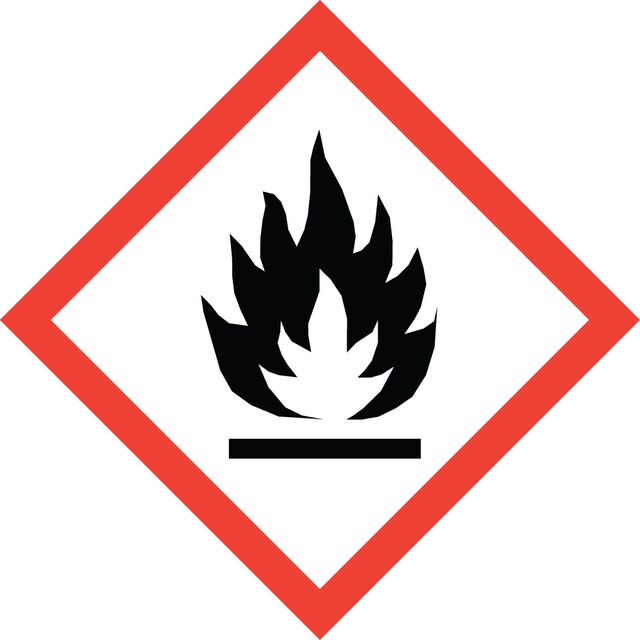
FlameCorrosion
GHS02,GHS05

Signal Word

Danger

Hazard Statements

H226 – H314

Precautionary Statements

P210 – P233 – P240 – P280 – P303 + P361 + P353 – P305 + P351 + P338

Hazard Classifications

Eye Dam. 1 – Flam. Liq. 3 – Skin Corr. 1A

Storage Class Code

3 – Flammable liquids

WGK

WGK 1

Flash Point(F)

102.2 °F

Flash Point(C)

39 °C

PROTOCOLS AND ARTICLES

Articles

Determination of Stevioside and Rebaudioside A in Stevia leaves, beverages and food additives using HPTLC-MS

HPTLC-MS was used to analyze stevioside and rebaudioside in artificial sweeteners, stevia plants, cola and isotonic drinks with a minimum of sample preparation.

Determination of Stevioside and Rebaudioside A in Stevia leaves, beverages and food additives using HPTLC-MS

HPTLC-MS was used to analyze stevioside and rebaudioside in artificial sweeteners, stevia plants, cola and isotonic drinks with a minimum of sample preparation.

Protocols

Analytical Method: Tartaric Acid in Water

Photometric determination with Ammonium vanadate

Analytical Method: Tartaric Acid in Water

Photometric determination with Ammonium vanadate

Ascorbic acid in fruit juices

Ascorbic acid in fruit juices – photometric determination with Tillmann’s reagent

Ascorbic acid in fruit juices

Ascorbic acid in fruit juices – photometric determination with Tillmann’s reagent

Related Content

Acids in Safebreak Bottles

Glass bottles are ideal for storing acids because they are inert and offer a long shelf life.

Reviews

There are no reviews yet.

Be the first to review “Acetic acid (glacial) 100%”

Your email address will not be published. Required fields are marked *